
In today’s digital era, the versatility and indispensability of video wall technology continue to expand across various environments, from control rooms and billboards to conference spaces and digital exhibitions. Among the array of components that drive a high-performance video wall, it’s crucial to grasp the distinctions between a video wall processor and a video wall controller. In this article, we’ll delve into these distinctions
Grasping the Role of a Video Wall Processor
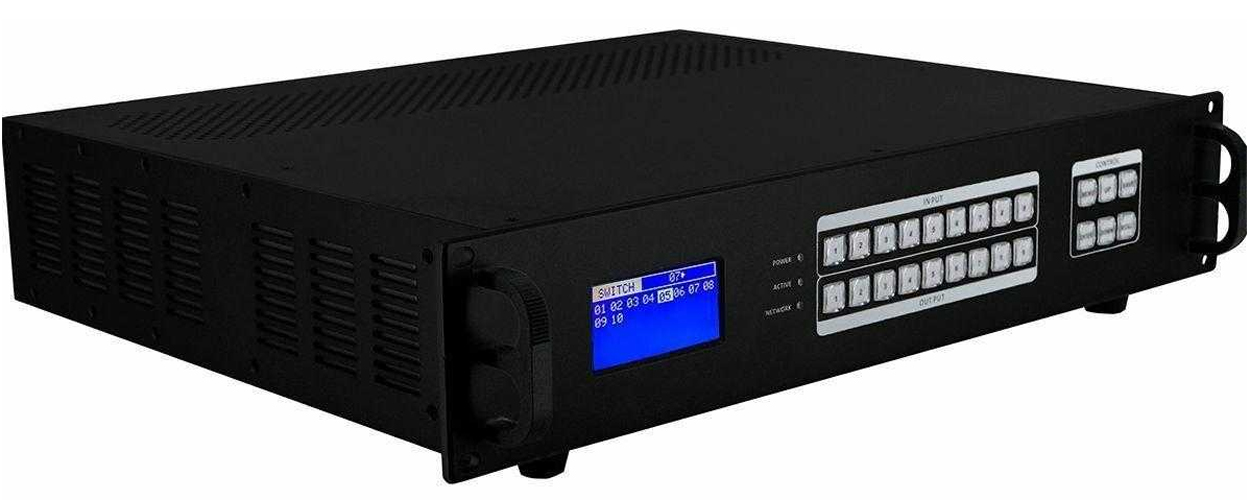
A video wall processor, a sophisticated hardware unit typically crafted by specialized manufacturers, takes center stage in seamlessly integrating multiple display screens. These screens, often comprised of LCD or LED panels, come together to form a unified, expansive display system. The primary function of a video wall processor revolves around dividing, fine-tuning, and creatively arranging content drawn from various inputs, including computers, cameras, and video players. This orchestration results in a harmonious, seamlessly blended image that spans multiple screens.
What truly sets a video wall processor apart is its exceptional image processing capabilities, offering a rich tapestry of effects like dynamic picture-in-picture displays, striking image stitching, mirroring, and even rotation. This versatility caters to the diverse needs of various application scenarios, making it a preferred choice for applications such as large-scale monitoring, digital advertising, and entertainment.
Video wall processors are versatile in their support for multiple inputs and outputs, allowing users to connect an array of signal sources and display screens. Positioned at the heart of the video wall, they shoulder the responsibility of processing and managing all image and video content, ensuring a seamless visual experience.
Unpacking the Role of a Video Wall Controller
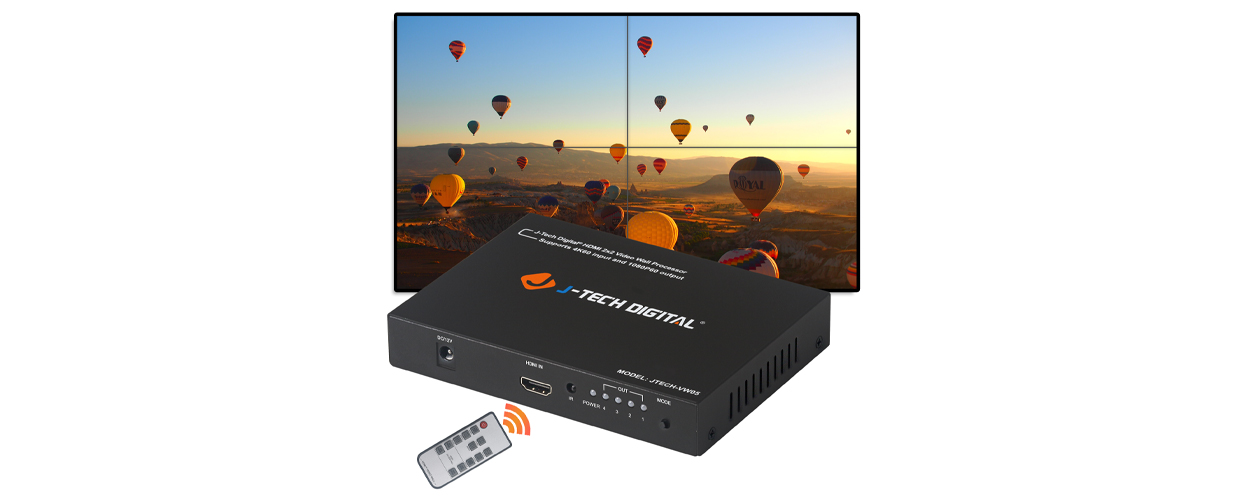
In contrast to the hardware-centric video wall processor, a video wall controller is not a hardware entity. Instead, it takes the form of software or an application, typically hosted on a computer. Its primary role revolves around content management and control, without delving into the realm of image processing. Video wall controllers often connect to the video wall through network connectivity, enabling users to perform real-time content layout management, input source switching, and remote monitoring.
The hallmark of video wall controllers is their user-friendly interfaces. These interfaces empower users to customize the video wall’s display layout, adjust resolutions, and execute operations such as seamless switching between various input sources. This level of control and customization positions video wall controllers as the ideal choice for addressing dynamic needs, whether they involve security monitoring, rapid responses to emergencies, or the dissemination of vital information.
Navigating the Selection Process
Selecting the right equipment, be it a video wall processor or a controller, hinges on meticulous evaluation of your specific requirements and the unique attributes of your application. Here are the key considerations:
- Functional Requirements: For projects demanding advanced image processing, content splitting, and intricate display layouts, the prowess of a video wall processor is unparalleled. Conversely, if content management and control are the primary focus, a video wall controller steps up to the plate.
- Scale: The size of your video wall is pivotal. Video wall processors excel in large-scale, high-resolution display systems, while video wall controllers are tailored for smaller to medium-sized installations.
- Budget Considerations: Video wall processors, with their enhanced image processing capabilities, often come with a higher price tag. Align your choice with your budgetary constraints.
- Ease of Use: Video wall controllers typically offer a more user-friendly setup and operation, whereas video wall processors may require specialized expertise.
- Future Scalability: Look ahead to the future. Opt for equipment that can smoothly accommodate your long-term expansion plans.
Understanding How They Operate
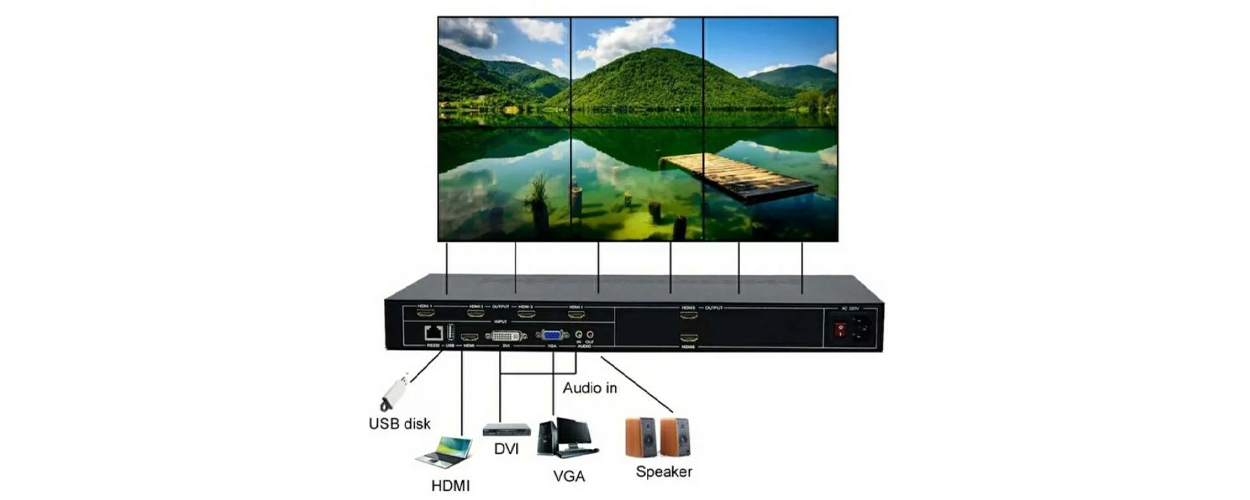
Video wall processors work their magic by expertly receiving image and video signals from a plethora of input sources. They skillfully process and partition these signals before delivering them to multiple display screens on the video wall, resulting in a unified, expansive, and captivating display. Video wall controllers, on the other hand, serve as the maestros of communication. They interact with the video wall, orchestrating the layout and content switching to ensure that the desired information takes center stage on the display at precisely the right moment.
In summary, video wall processors and controllers may share similarities, but their roles and applications are distinct. The choice between the two is influenced by the scale, budget, and functional requirements of your project. Regardless of your decision, video wall technology is poised to offer a spectacular solution for your presentation, monitoring, or advertising needs.
Post time: Nov-09-2023